This page renders best in Firefox (or Safari, or Chrome)
Readings
I like to read, and I read a lot of books -- the primary impetus for starting this site was to give myself a way of keeping track of what I am thinking about the books I am reading, and to remember the thoughts as time passes.
See my reading list for what I'm interested in this year.
(Not today; yesterday -- today the sun is shining.)
Snufkin got a feeling that he wanted to write songs. He waited until he was quite sure of the feeling and one evening he got his mouth-organ from the bottom of his rucksack. In August, somewhere in Moominvalley, he had hit on five bars which would undoubtedly provide a marvellous beginning for a tune. They had come completely naturally as notes do when they have been left in peace. Now the time had come to take them out again and let them become a song about rain.
This is nice: last night I was reading Moominvalley in November with Sylvia, and we came across the passage above. Later on, and without being conscious of the coincidence until this morning, I sat down and finished writing out a song I have had in the back of my mind since two weeks ago (when I first thought of it I wrote down the first two bars) -- I'm tentatively calling it "Rainy Day".
An interesting thing with the key of this piece -- when I started out I was thinking it was in D minor; but then something happened in measure 5. If the three-note run at the end of that measure is D-E-G♮, then the song ends up resolving on D; if it is E-G♮-A, the resolution is on A, and the key is A phrygian. I am not sure what the accidental sharps on C and G are doing to the key. Hoping to record this later on, it's pretty hypnotic (like listening to a heavy rain outside, was the genesis of the working title.)
posted morning of May 10th, 2009: Respond ➳ More posts about Songs
Pamuk: I was [in Snow] underlining the clerical nature of the novelist as opposed to that of the poet, who has an immensely prestigious tradition in Turkey. To be a poet is a popular and respected thing.... After Western ideas came to Turkey, this legacy was combined with a romantic and modern idea of the poet as a person who burns for truth.... On the other hand, a novelist is essentially a person who covers distance through his patience, slowly, like an ant. A novelist impresses us not by his demonic and romantic vision, but by his patience.
Interviewer: Have you ever written poetry?
Pamuk: ...I did when I was eighteen and I published some poems in Turkey, but then I quit. My explanation is that I realized that a poet is someone through whom God is speaking. You have to be possessed by poetry. I tried my hand at poetry, but I realized after some time that God was not speaking to me. I was sorry about this and then I tried to imagine -- if God were speaking through me, what would he be saying? I began to write very meticulously, slowly, trying to figure this out. That is prose writing, fiction writing.
At Orbis Quintus, paledave links to a bunch of other Paris Review interviews.
I'm very taken with this idea from "Pierre Menard" about total identification with the author. I've written before about striving for that reading fiction and essays, but haven't really thought about it in connection with poetry. But just now I had the thought (while experimenting with FB statusses), Why not try the final bit of Bolañ's "Resurección" in the first person -- substituting myself for "poetry"?
I slip into the dream like a dead diver into the eye of God
(Thanks to Jorge for the structuring of the translation.)
I happened on a nice site today; literatura.us has a good broad selection of short stories, essays and poetry in Spanish. Mostly Latin American, and all the usual suspects -- Cortázar, Borges, Cardenal, Neruda... -- and a lot of other authors that I know and more that I don't. Also there is a limited but well-chosen selection of stories from other languages translated into Spanish; I just about fell over laughing when I read the title of "Un dÃa perfecta para el pez plátano."
I don't quite understand what this website is -- it is created by Ramón Paredes, who is a grad student at CUNY and is the author of Marinelly y otros mujeres -- is it just a selection of literature that he finds vital? Whatever, I'm very glad to have found out about it.
I was looking at the beginning of "Pierre Menard, Author of Don Quixote" (in Anthony Bonner's translation) this evening and was a bit surprised to find two statments that both appeal to me strongly, and neither of which I have noticed in previous readings. Borges attributes to Menard the opinion that "censuring and praising were sentimental operations which had nothing to do with criticism." (Menard Ârecuerdo declaraba que censurar y alabar son operaciones sentimentales que nada tienen que ver con la crÃtica.) This is a fairly commonplace idea and a useful one; I like the way it is stated here a lot (the adjective "sentimental" is just right), and it seems like there is a mnemonic quality to this formulation. And the narrator says that part of what inspired Menard's project was "that philological fragment of Novalis... which outlines the theme of total identification with a specific author." According to Daniel Balderston (in Out of Context: historical reference and the representation of reality in Borges), the fragment referred to is:
I only show that I have understood an author when I can act in his spirit; when, without diminishing his individuality, I can translate him and transform him in many ways.*
Well this is lovely. Something to chew on and over for a while.
*EfraÃn Kristal also quotes this line in his Invisible Work: Borges and Translation, as does Daniel Balderston in Menard and His Contemporaries.
At the dark doorways
they dinned and hammered;
there was clang of swords
and crash of axes.
The smiths of battle
smote the anvils;
sparked and splintered
spears and helmets.
In they hacked them,
out they hurled them;
bears assailing,
boars defending.
Stones and stairways
streamed and darkened;
day came dimly --
the doors were held.
Speaking of forthcoming books by authors who no longer walk among us: Painterofblue sent along a link to an interview with Christopher Tolkien about his father's book The Legend of Sigurd and Gudrún, which is coming off the presses today. I had heard that this book would be coming out; what I did not know is that it's an epic poem. This seems extremely daring to me, and it could possibly be great.* It sort of magnifies my perception of how important world-creation and history-creation was to Tolkien; I would not have thought of it but obviously if you're making up the history of a civilization, you've got to give it epic verse.
Elizabeth Hand reviews the book for the Washington Post, and says, "Perhaps more than any other single work of Tolkien's, this one provides a direct experience of the fierce intellect and imagination that produced 'the author of the century,' as British scholar T.A. Shippey called him."
* Thinking a little more about this: in epic verse, the difficulties I had with LOTR would fall away completely (assuming the verse was well done) -- it's no longer an issue whether I can believe the dialog and the motivations, and I'll be able to pay attention exclusively to the imagery and themes -- I liked LOTR best when I was reading this way.
Exciting news comes my way today -- I had heard that a new edition of Cosmicomics was being published; today at The Quarterly Conversation, Scott Esposito has more information: the book will include Cosmicomics stories Calvino published throughout his career, more than half of which are not in the previous English edition of Cosmicomics, and 7 of which are appearing for the first time in English. (One of these was published in February at The New Yorker; and two more are in the current Harper's, only accessible to subscribers.) It has been many years since I read these stories, I'm really looking forward to rereading and to the new ones.
The moon is old, Qfwfq agreed, pitted with holes, worn out. Rolling naked through the skies, it erodes and loses its flesh like a bone that's been gnawed. This is not the first time that such a thing has happened. I remember moons that were even older and more battered than this one; I've seen loads of these moons, seen them being born and running across the sky and dying out, one punctured by hail from shooting stars, another exploding from all its craters, and yet another oozing drops of topaz-colored sweat that evaporated immediately, then being covered by greenish clouds and reduced to a dried-up, spongy shell.
The story I posted about below, "Asemblea los martes" by Slavko Zupcic, is just lovely to read aloud and listen, without the stream of language being fully comprehensible at reading-aloud speed. This is like the experiences I was having with recordings of spoken Spanish earlier this year -- or like reading e.g. Faulkner or Pynchon can be, where I slip in and out of understanding language as sentences containing meaning, and hearing language as melodic, rhythmic bits of sound.* So all this is keeping in mind Dave Barber's post from Thursday, "What We Lose in Growing Up" -- the way that post resonates for me is with my constant need to craft a narrative that justifies what I'm doing, that points out how I am productively enabling my development into a better person. I was thinking, the moment of joy in the reading aloud, the unreflective perceiving language as sound, is a moment where this narrative is absent; what I'm doing now is constructing the narrative around that moment, where what I'd really like to be able to do is to communicate the moment of rapture. Not quite sure where to go from that...
Porque sí. Porque ya hemos enviado las tarjetas. Porque las invitaciones quedaron bellísimas. Porque les pusimos los cruasanes míos y las tamaras de Ernesto. Porque las hicimos con cartulina rosada. Porque les dibujamos corazones por todas partes. ...
Relaciones, visitas y olanzapina para todas, por favor.
The highlight of this issue of Zoetrope: All-Story is certainly the last story, "Tuesday Meetings" by Slavko Zupcic. It's the story of Benedict's drive-by benediction of a mental institution, as told by the inmates of the institution; specifically by schizophrenic René, who publishes the Haloperidol Eye with minutes of their Tuesday meetings with Ismael, the resident psychiatrist. The story is complex, dense, subtle, and hilariously funny; I'm not going to write about it right now because I'm still a fair ways away from understanding the Spanish text, but hopefully will return to it later on. This story by itself is worth the price of the issue; I'm definitely thinking about seeking out some of Zupcic's other work. I see he has written a book billed as a "children's novel", Giuliana Labolita: el caso de Pepe Toledo -- who knows? that might be right at my reading level. This story does not seem to be available online (no, this is wrong: the story is readable in English only at Zoetrope's site); another story of his, "Réquiem" can be read at piedepágina.com.
The stories in this issue of Zoetrope: All-Story are getting better and more absorbing as I work my way through the magazine -- probably a product of my growing focus and attention. I just finished reading (for the third time, I think I've got it now) Antonio Ungar's "Hypothetically" (online here) -- it reminded me a bit of Waiting for Godot except with only a single tramp. It's a brief (5-page) fable about wanting to change one's circumstances, but in the end just going on. It takes place in three scenes: the narrator's friend Pierre witnesses a brutal argument ending in murder in the house next door; he fantasizes about leaving London and his job and changing his life; then a month later he is with his friends, celebrating a new 2-year contract from his employer, talking about moving in with his girlfriend and applying for British citizenship. In the last sentences he turns to the narrator "como preguntando algo"; his friend can only "inclinar un poco la cabeza y felicitarlo, con la copa arriba, ensayando la mejor de mis sonrisas."
This fable runs the risk of being over-determined -- a similar story has been written often enough that if Ungar dwelled too much on the framework of the fable, it would be boring and trite. But I get the impression he knows this -- most of the story is the first scene, quickly setting up Pierre's life and thoughts and then describing the argument and the crime with a keen realism which contrasts nicely with Pierre's detachment. The second and third scenes are quite brief and work really well this way -- Ungar does not spend time driving his point home, and because he passes it so lightly along, its impact is much greater.



 previous English edition of Cosmicomics, and 7 of which are appearing for the first time in English. (One of these was published in February at


 with minutes of their Tuesday meetings with Ismael, the resident psychiatrist. The story is complex, dense, subtle, and hilariously funny; I'm not going to write about it right now because I'm still a fair ways away from understanding the Spanish text, but hopefully will return to it later on. This story by itself is worth the price of the issue; I'm definitely thinking about seeking out some of Zupcic's other work. I see he has written a book billed as a "children's novel", Giuliana Labolita: el caso de Pepe Toledo -- who knows? that might be right at my reading level. This story does not seem to be available online (no, this is wrong: the story is readable in English only at
 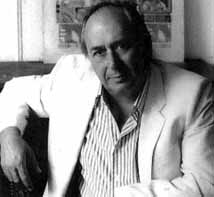 This week's New Yorker includes a posthumous short story,