|
|
Sunday, July 10th, 2011
The first and eighth poems in the "el maestro de Tarca" series both feature el maestro seated on Eagle Rock, telling his disciples what is fitting and just.
EL MAESTRO DE TARCA (â… )
Sentado en la piedra del Ãguila
el maestro de Tarca nos decÃa:
Es conveniente
es recto
que el marinero
tenga cogidas
las cosas por su nombre.
En el peligro
son las cosas sin nombre
las que dañan.
|
EL MAESTRO DE TARCA (â… )
Seated up on Eagle Rock
el maestro de Tarca told us:
It is fitting
it is just
that the seafarer
should grasp
all things by their name.
In times of danger
the things without names
are the ones that harm.
|
Carlos MejÃa Godoy sings
about grasping all things by their name
EL MAESTRO DE TARCA (â…§)
Sentado en la piedra del Ãguila
el maestro de Tarca nos decÃa:
Es conveniente
es recto
que el marinero
olvide a las aguas
su aventura.
Estela hecha
tiempo vivido
Estela deshecha
tiempo borrado. |
EL MAESTRO DE TARCA (â…§)
Seated up on Eagle Rock
el maestro de Tarca told us:
It is fitting
it is just
that the seafarer
should entrust his adventure
to the waters.
Wake formed
time lived
Wake dissolved
time erased. |
posted morning of July 10th, 2011: Respond
➳ More posts about Poets of Nicaragua
|  |
Saturday, July 9th, 2011
In the third "teachings of el maestro de Tarca" poem, the customary introduction is reversed: here Cifar is speaking to the teacher. This suggests to me that the other poems in this series, where el maestro is speaking "to me" or "to us", are told from the POV of Cifar. The two main difficulties for me in translating this poem were the conditional tense of "jurarÃa" and the parallelism in the final two lines. I'm not really sure what conditional tense does -- from its name it sounds like it has a similar function to subjunctive. Schulman translates "jurarÃa" as "I would swear", which sounds ok, but makes me ask what the condition is. I am going with "I could swear" which sounds a little more natural to my ears. (As a weak bonus, "I could swear it" scans the same as "jurarÃa" -- though in the rest of the poem, I am not doing much to preserve the metric pattern.) The last two lines, el maestro's response to Cifar, are the koanic element of this poem. In the original there is a strong parallelism: "Lo conocido/ es lo desconocido." I am going with a literal rendering to preserve this parallelism even though I think it mangles the meaning of the words slightly. Schulman uses the wordy "That which is known/ is the unknown", which I think is slightly closer to Cuadra's meaning, but not nearly as pleasant to read.
EL MAESTRO DE TARCA (â…¢)
Maestro, dijo Cifar,
seguà tu consejo
y crucé el Lago
buscando la isla desconocida.
Fui con viento benévolo
a la más lejana, virgen y perdida
Pero
que yo conocà esa isla
jurarÃa!
que su sonoro acantilado
devolvió mi canto un dÃa
jurarÃa!
que era la misma mujer
casi lo jurarÃa!
Sonrió el maestro y dijo:
Lo conocido
es lo desconocido. |
EL MAESTRO DE TARCA (â…¢)
Maestro, said Cifar,
I followed your counsel
and crossed the Lake
in search of the unknown island.
I sailed with a gentle wind
to its farthest point, untouched and lost
But
I knew this island
I could swear it!
her echoing cliffs
had once already returned my song
I could swear it!
it was the same woman
I could almost swear it!
El maestro smiled and spoke:
The known
is the unknown. |
The fourth poem in the series is a sweet little gem.
EL MAESTRO DE TARCA (â…£)
Dijo el maestro
de Tarca:
Coge la cigarra
del ala
Al menos
llevas en la mano
el canto.
|
EL MAESTRO DE TARCA (â…£)
Thus spoke el maestro
de Tarca:
Seize the locust
by its wing
At least
carry in your hand
its song.
|
(I am tampering with the voice of the verb "llevas" in the next-to-last line -- Schulman renders it as "you carry" which is true to the original; whereas "coge" is imperative, "llevas" is indicative.) (Update: here is a better idea.)
posted afternoon of July 9th, 2011: Respond
➳ More posts about Readings
|  |
|
Scattered throughout Cuadra's Songs of Cifar and of the Sweet Sea are eleven short (even "koanic") poems titled "El maestro de Tarca" -- these seem different from the rest of the text. They are printed in italics, and they all begin with the phrase "El maestro de Tarca was telling us" or "was telling me" or similar. I think these poems might be the framework around which the rest of the book is built... Not sure, but that is anyway an interesting idea. Tarca is not known to Google Maps; other Internet sources suggest it is on the island of El Carmen, off the western shore of Lake Nicaragua. Schulman translates "maestro" as "master"; it could also be translated "teacher". My impulse is to leave the phrase "el maestro de Tarca" untranslated. I'm interested this morning in the ninth poem of this series, one which Schulman and Zavala do not include in their edition. It presents a few challenges for the translator; key among them is the term "La Alegradora". "Alegrar" is "gladden", so "alegradora" would be "someone who makes you happy" -- span¡shd!ct.com gives it as an archaic term for "jester". This is pretty clearly not the meaning intended in the poem; a little digging around with Google* turns up a blog entry from No-Nan-Tzin [you will get an adult content warning when clicking this link, you can safely ignore it], who tells us that "alegradora" is the Spanish rendering of the Nahuatl term "tlatlamiani", a prostitute in pre-Columbian Mexico. Well: "prostitute" works semantically in the poem; but why did Cuadra not use "La Prostituta"? Was "alegradora" still idiomatic in 20th-Century Nicaragua? Is the usage intentionally archaic, hearkening back to ancient times (this seems likely)? I believe the Aztec empire included Nicaragua; so this is my working assumption, and I am going to leave "La Alegradora" untranslated. But if a Nicaraguan reader would recognize it immediately as meaning "prostitute", this may be a poor choice.
EL MAESTRO DE TARCA (â…¨)
El maestro de Tarca
me decÃa:
La Alegradora
con su cuerpo da placer,
no con su recuerdo.
Con la mano hace señas
con los ojos llama,
no con su recuerdo.
La Alegradora
es el puerto
la tierra
que sólo es del pobre
en la noche.
|
EL MAESTRO DE TARCA (â…¨)
El maestro de Tarca
was telling me:
La Alegradora
gives you pleasure with her body,
not with her remembrance.
With her hand she beckons
with her eyes she calls you hence,
not with her remembrance.
La Alegradora
is the port
is the land
which the poor man only knows
by night.
|
 * The same round of searches also brought to my attention this ode by Aztec prince Tlaltecatzin, who praises his love as a "precious toasted huitlacoche". The original Nahuatl is here.
posted morning of July 9th, 2011: 3 responses
➳ More posts about Translation
|  |
Monday, July 4th, 2011
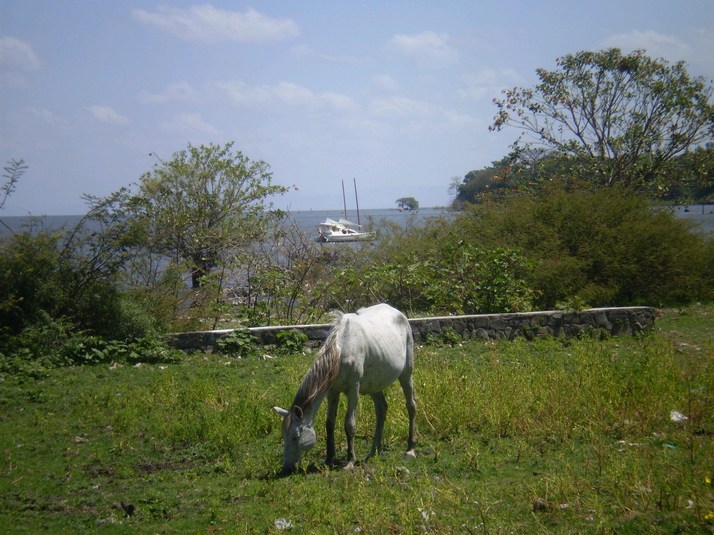 Source material for a poem I posted today in comments at Dave Bonta's Morning Porch -- this is from Pablo Antonio Cuadra's Songs of Cifar and of the Sweet Sea (which, happy day, I discover Tony Bigras of turtleislands.net has uploaded in full). Translation is my own, with reference to that of Grace Schulman and Ann McCarthy de Zavala. Source material for a poem I posted today in comments at Dave Bonta's Morning Porch -- this is from Pablo Antonio Cuadra's Songs of Cifar and of the Sweet Sea (which, happy day, I discover Tony Bigras of turtleislands.net has uploaded in full). Translation is my own, with reference to that of Grace Schulman and Ann McCarthy de Zavala.
Caballos en el Lago
Los caballos bajan al amanecer.
Entran al lago de oro y avanzan
-- ola contra ola
el enarcado cuello y crines --
a la cegadora claridad.
Muchachos desnudos
bañan sus ancas
y ellos yerguen
ebrios de luz
su estampa antigua.
Escuchan
-- la oreja atenta --
el sutil clarÃn de la mañana
y miran
el vasto campo de batalla.
Entonces sueñan
-- bulle
la remota osadÃa --
se remontan
a los dÃas heroicos,
cuando el hierro
devolvÃa al sol sus lanzas
potros blancos
escuadrones de plata
el grito
lejanÃsimo de los pájaros
y el viento.
Pero vuelven
(Látigo
es el tiempo)
Al golpe
enfilan hacia tierra
-- bajan la frente --
y uncido
al carro
el sueño
queda
atrás
dormido
el viento.
| |
Horses in the Lake
The horses come down at daybreak.
They enter into the golden lake, and on
-- wave after wave
the long arched necks, the manes --
into the blinding clearness.
And naked boys
are bathing their haunchesdrunk with light
they're lifting up their ancient image.
They listen
-- ears perked up --
to the morning's subtle trumpet
and they gaze
on the enormous field of battle.
And then they dream-- and glimpse
remote effrontery -- rising back up
to the days of glory,
when steel met
the sun's proud lances
stallions white
and squadrons silver
the cries
of distant birds and
of the wind.
But they return
(Before
the whip of time)
And struck
move slowly back to land
-- they bow their heads --
they're yoked to
the wagon
the dream
remains
behind
asleep
the wind.
|
posted afternoon of July 4th, 2011: Respond
➳ More posts about Writing Projects
|  |
|
Woke up with a song ringing in my ears and a poem drifting through my head.
My shadow has no memory of
that frantic, panicked, pell-mell flight --
No pain or expectations, craving,
dying to escape his bondage.
Look, he's crouching, vibrates with
desire that only shadows feel;
He's poised to spring, to pounce, as if
the shadow of some predator,
Some dusky, fleeting contrast on
the sidewalk of my consciousness,
Some ragged blank impression on
the sand dunes of my memory --
We move, the spell is broken, sliding
frictionless along the garden
Seeking our reflection in
the pools of last night's rainfall,
In the golden machinations of the sunlight from the east.
posted morning of July 4th, 2011: Respond
➳ More posts about Poetry
 |
Saturday, July second, 2011
 Thanks to young urban bicycle enthusiast Dorothy Gambrell, today I found out about Saveur's Recipe Comix -- right now I am drinking (courtesy of A Softer World's Emily Horne) a Black Mischief -- this is Horne's take on a Kingsley Amis cocktail recipe, and boy oh boy is it smooth. Thanks to young urban bicycle enthusiast Dorothy Gambrell, today I found out about Saveur's Recipe Comix -- right now I am drinking (courtesy of A Softer World's Emily Horne) a Black Mischief -- this is Horne's take on a Kingsley Amis cocktail recipe, and boy oh boy is it smooth.
In general I am all in favor of mixing comix with other forms. Gambrell's recipe for Chocolate Ice-Cream is a good one, and the peripheral cartoony stuff adds to it, gives it resonance. I will remember this cocktail recipe because of how good it tastes, and also because of the A Softer World tie-in.
posted afternoon of July second, 2011: 5 responses
➳ More posts about Comix
|  |
Thursday, June 30th, 2011
A new poem from Pelele had the happy effect of reminding me of one of my very favorite poems, Kenneth Koch's "Lunch" -- and the funny thing is, I was noticing similarities to "Lunch" 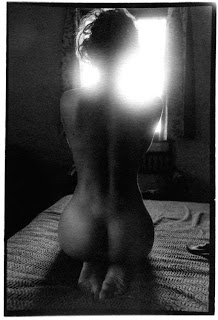 even before I looked up to the top of the poem and noticed Pelele's title... even before I looked up to the top of the poem and noticed Pelele's title...
Breakfastby Eduardo Valverde
Last night I dreamed of you -- or of your father:
a tall man under his hat.
The place I found myself reminded me,
its silence, of a bird -- a bird that’s sleeping,
an engine, maybe, lying in the junkheap.
He came along, his face drawn long, like kids
when they play at grown-up
or like a bankrupt god
who tallies up his mornings carefully
and finds that all that glitters is not gold;
he carried a green bottle in his hands
and the analgesic pain that comes of touching earthly things.
He spoke enthusiastically of the sea's paternal womb,
of land unmapped, unconquered, which begins off in the darkness --
in every single letter of the word, “desperation†--
He spoke of a taste like olives, of the flavor in her breasts,
in hers who never aged but who had brought forth many daughters
each with olive nipples;
of the unease that he feels before the window in a photo
in which a bowl of fruit is standing lonesome on the floor
of the hallway in a vacant house --
or I should say, before the light that’s coming through the window,
an angel hewn of green basalt;
a solid angel, weak Annunciation.
He poured me out a cup and took the bottle by its neck.
Could not remember you; but he said,
with joy in his eyes, he said My kids were like the rattle
of the hills when trains are rolling by;
like a pack of dogs, dogs baying in the distance
to push your weary heart along the journey.
It must have been getting dark, I guess -- a solitary lamp
was turning back to ash his eyes and moustache
And me, I was anxious, I needed to pee;
I felt my dress was falling into shadow --
its weight returning --
raised my hands to my cheeks and found I was not dying
nor was I really back among the living.
 Two images in particular seem like they could have come from Koch's pen, the woman "who never aged but who had brought forth many daughters/ each with olive nipples", and the man boasting, "My kids were like the rattle/ of the hills when trains are rolling by" -- also the general flow of the text and of voice reminds me of Koch. (I have probably intensified this similarity in my translation; but I believe it is present in the original as well.) The "analgesic pain that comes of touching earthly things" is going to stay with me for a long time.
posted evening of June 30th, 2011: 2 responses
➳ More posts about Dreams
| |
Tuesday, June 28th, 2011
Allà estaba, simplemente sentado allà en el parking del body shop, los guardabarros delantero plegado como acordeón. Me decÃas qué lástima, tan hermoso y casà nuevo un coche... QuerÃas correr a casa para las pinturas y caballete traer, pero estaba ansioso. QuerÃa ir.
Aquella noche fumábamos hierba, nosotros y Antonia, no podÃas dejar de inventar cuentos sobre el choque, tú loca, estabas riendo y contandonos lo que ha pasado, quiénes habÃan resultado herido, cuáles consequencias... Antonia reÃa tambien, una risa áspera, y su collar de coralina roja temblaba ritmicamente.
posted evening of June 28th, 2011: Respond
|  |
Monday, June 27th, 2011
Les diremos todo a ellos, todo el cuento a Antonia y a sus amigas, todo el cuento desde el inicio. Lo contaremos, como te has despertado aquella mañana, también agotada, repitiendo esas frases melosas y vacÃas que habÃas oÃdo en sueños. Como no podÃa hacer cara o cruz de todo lo y he bajado para preparar café.
posted evening of June 27th, 2011: Respond
| |
Sunday, June 26th, 2011
I find myself fascinated by Steven White's statement about Alfonso Cortés, Nicaragua's "poeta loco," that he "was prone to fits of violence that coincided with the full moon" -- I am finding in Cortés' poetry some beautiful fragments without its yet coming together for me as a whole. Inscribed on Cortés' tomb in León (adjacent to the tomb of Rubén Dario) is his poem "Supplication." Inscribed on Cortés' tomb in León (adjacent to the tomb of Rubén Dario) is his poem "Supplication."
Time is hunger, space is cold
pray, pray: only supplication
can satisfy the longings of the void.
Dreaming is a lonely rock
where the eagle of the soul can build his nest:
dream, dream, dream the whole day long.
(I see a couple of references, in the few of Cortés' poems that White includes, to ether -- I wonder if he was a recreational user and if so, whether that had anything to do with his reputation for insanity.)
posted evening of June 26th, 2011: 2 responses
| Previous posts about Projects
Archives  | | |
|
Drop me a line! or, sign my Guestbook.
•
Check out Ellen's writing at Patch.com.
| |