|
|
Saturday, January 10th, 2009
The poems in Fully Empowered are kind of perfect for me to read in Spanish -- short stanzas, short lines, so I can hold them in my head while I go over Reid's translation and back over the original. And lots of repetition of words, so I can maybe get some of them into my vocabulary -- building vocabulary has always been the most difficult part of language study for me. The repetitions seem meaningful -- certain words occur in almost every poem, like "línea" (in various senses), "caer" (in various forms), words relating to the water like "mar," "océan," "ola," "espuma,"... There are also frequent references to geography and geometry, to birds, 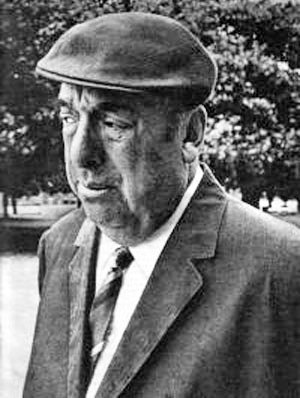 to movement, to towers... I haven't quite put all this together yet -- the references to water make me think about Neruda being Chilean, seems like the ocean must be a pretty important part of life in Chile. (Jorge, can you speak to this?) The many repetitions of "línea" are making me think about geometry and language and again, the sea, and tying them together. to movement, to towers... I haven't quite put all this together yet -- the references to water make me think about Neruda being Chilean, seems like the ocean must be a pretty important part of life in Chile. (Jorge, can you speak to this?) The many repetitions of "línea" are making me think about geometry and language and again, the sea, and tying them together. I just love the rhythm of this passage, which totally does not come through in the translation; I haven't been able to make a lot of sense of the passage, with or without the translation, but the sound of it is wonderful. From the second stanza of "Pájaro":
Cuando volví de tantos viajes
me quedó suspendido y verde
entre el sol y la geografía:
vi cómo trabajan las alas,
cómo se transmite el perfume
por un telégrafo emplumado
y desde arriba vi el camino,
los manantiales, las tejas,
los pescadores a pescar,
los pantalones de la espuma,
todo desde mi cielo verde.
posted afternoon of January 10th, 2009: 2 responses
➳ More posts about Pablo Neruda
|  |
|
Looking through Ellen's old poetry books I am glad to find a bilingual edition of Pablo Neruda's poetry, Fully Empowered. (Translations are by Alastair Reid, and I'm making a note to myself to look up this guy whose name is on much of the mid-century Latin American literature that interests me.) Take a look at the first stanza of the first poem in the book.
Deber del poeta
A quien no escucha el mar en este viernes
por la mañana, a quien adentro de algo,
casa, oficina, fábrica o mujer,
o calle o mina o seco calabozo:
a éste yo acudo y sin hablar ni ver
llego y abro la puerta del encierro
y un sin fin se oye vago en la insistencia
un largo trueno roto se encadena
al peso del planeta y de la espuma,
surgen los rÃos roncos del océano,
vibra veloz en su rosal la estrella
y el mar palpita, muere y continúa.
| |
The Poet's Obligation
To whoever is not listening to the sea
this Friday morning, to whoever is cooped up
in house or office, factory or woman
or street or mine or dry prison cell,
to him I come, and without speaking or looking
I arrive and open the door of his prison,
and a vibration starts up, vague and insistent,
a long rumble of thunder adds itself
to the weight of the planet and the foam,
the groaning rivers of the ocean rise,
the star vibrates quickly in its corona
and the sea beats, dies, and goes on beating.
|
 A couple things -- why does Neruda say "casa, oficina, fábrica o mujer" -- is he meaning a woman is something to keep you cooped up like a house or a factory? This sounds sexist in a pretty retrograde tone which is not something I'd expect from Neruda; but then I don't really know that much about him -- think of him vaguely as progressive, which I take to imply egalitarian. "Adentro de... mujer" leads me to think of a fetus but I'm pretty sure that is not who the poem is addressed to... In the phrase "un sin fin se oye" is "un" a pronoun -- is this literally "something hears itself endlessly" -- I had thought "un" could only be an article, is this a poetic usage? This is beautiful imagery; but I don't think I can read it closely enough in the translation to realy appreciate it -- I expect this is a failing more of my own reading than of the translation. I'm really happy to have read the observation (I think I read it first from Daniel Hahn; I've seen it referenced several places since then, most recently by Katherine Silver, so maybe it is a commonplace) that translation is a form of reading closely -- this is opening up a new understanding of how to read closely for me.
posted afternoon of January 10th, 2009: Respond
➳ More posts about Readings
|  |
Sunday, January 4th, 2009
Saramago posts today about writing. Interesting, this is the first I have noticed him blogging about blogging. The usual qualifiers about me not being a great translator apply; he says roughly: Has it been worth the struggle?
Have these commentaries, these opinions, these critiques been worth the struggle?
Is the world better than before? And me, what about me? Is this what I hoped for?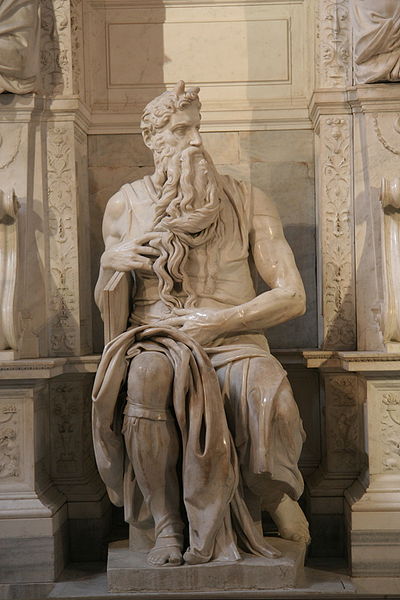 Am I satisfied with the work? To answer "yes" to all these questions, even only to some,
would demonstrate clearly an inexcusable mental blindness. And to respond with
a "no" without exceptions -- what could that be? Excessive modesty? Resignation? Or perhaps
the consciousness that some human labors are nothing more than a pale shadow
of the labors we dream of? It is told how Michelangelo, when he finished the Moses which
we see in Rome, in the church of San Pietro in Vincoli, tapped the statue on the knee with
his hammer and cried: "Speak!" One needn't say that Moses did not speak.
Moses never speaks. In the same way he who has written in this place at length these last few months
has not been more wordy nor more eloquent than that which could possibly be written,
precisely that which the author would like to ask for, murmuring, "Talk,
please, tell me what you are, what you have served for, if it was for anything." They are quiet, they don't respond.
What to do, then? Interrogating words is the destiny of one who writes. An article? A column? A book? It will be done, but already we know that Moses will not respond.
Am I satisfied with the work? To answer "yes" to all these questions, even only to some,
would demonstrate clearly an inexcusable mental blindness. And to respond with
a "no" without exceptions -- what could that be? Excessive modesty? Resignation? Or perhaps
the consciousness that some human labors are nothing more than a pale shadow
of the labors we dream of? It is told how Michelangelo, when he finished the Moses which
we see in Rome, in the church of San Pietro in Vincoli, tapped the statue on the knee with
his hammer and cried: "Speak!" One needn't say that Moses did not speak.
Moses never speaks. In the same way he who has written in this place at length these last few months
has not been more wordy nor more eloquent than that which could possibly be written,
precisely that which the author would like to ask for, murmuring, "Talk,
please, tell me what you are, what you have served for, if it was for anything." They are quiet, they don't respond.
What to do, then? Interrogating words is the destiny of one who writes. An article? A column? A book? It will be done, but already we know that Moses will not respond.
(This is a step forward for me; rather than using Google translator and massaging the output as I've been doing, I worked directly from the Spanish text.)
posted evening of January 4th, 2009: 3 responses
➳ More posts about Saramago's Notebook
|  |
Tuesday, December 30th, 2008
Last week, Saramago posted a Christmas Message:
Several years ago, no less than in 1993, I wrote in the Lanzarote Notebooks several words which were the delight of some theologians from this part of the Peninsula, especially Juan José Tamayo, who since then has generously given me his friendship. They were these: "God is the silence of the universe, and man is the scream which imparts sentience to this silence." I recognized that this idea was not poorly stated, with its "quantum satis" of poetry, its gently provocative intention and its subtext that atheists risk much in venturing onto the rough paths of theology, even those that are elemental. In these days when one celebrates the birth of Christ, another idea has occurred to me, perhaps even more provocative, it could even be called revolutionary, which can be enunciated in just a few words. Here. If it is true that Jesus, at the last supper, said to the disciples, showing them the bread and the wine which they found on the table: "This is my body, this is my blood," then it would not be illegitimate to conclude that the innumerable suppers, the Pantagrueline gluttonies, the Homeric bellyfuls with which millions and millions of stomachs have risked the dangers of a fatal bout of indigestion, would be nothing more than multitudinous copies, at the same time actual and symbolic, of the last supper: believers nourish themselves with god, devour him, digest him, eliminate him, until the next nativity, until the next supper, with the ritual of a material and mystical hunger forever unsatisfied. Let's see now what the theologians say.
I didn't know about the Cuadernos de Lanzarote before, this looks like just my cup of tea.
posted afternoon of December 30th, 2008: Respond
➳ More posts about José Saramago
|  |
Monday, December 29th, 2008
Saramago is starting his next book. He knows what the title will be, but he's not telling:
I am turning to a new book. When, in the middle of a conversation, I let fall this news, the inevitable question is put to me (my nephew Olmo asked me last night): and what will the title be? The most convenient solution for me would be to answer that I don't have one yet, that I have to get to the end in order to decide between the possibilities which are going to present themselves to me (assuming that they are going to) over the course of the work. Convenient, without a doubt, but false. The truth is that not even the first lines of the book had been written and I already knew, since nearly three years beforehand, what it would be called. Someone could ask: why this secrecy? Because the word of the title (it's only one word) contains, by itself, the complete story. I usually say that whoever doesn't have the patience to read my books, should pass his eyes at least over the epigraphs, because then he'll know the whole thing. I don't know if the book I'm working on will bear an epigraph. Maybe not. The title will suffice.
In other news, I'm thinking the best way for me to learn Spanish might just be to practice reading. Specifically I'm going to practice reading blogs like Saramago's and Jorge López', and find some more Spanish-language blogs to read, and reading the Bible. Hi to any new readers showing up from Edmond Caldwell's Contra James Wood project. I don't have anything against Wood -- wouldn't really have recognized the name prior to reading Mr. Caldwell's piece -- but the criticism seems (at first reading) well-founded.
posted evening of December 29th, 2008: Respond
➳ More posts about Translation
| |
Friday, December 26th, 2008
The thing I am most wanting to do in 2009 is to learn Spanish. I feel like I'm almost on the cusp of being competent in the language -- I can read passages and have a broad grasp of their meaning immediately, and understand them in detail with the help of a dictionary or Babelfish; what I'm looking for is the kind of immediate understanding that I have with English, or that I nearly, sort-of have with German. I'm wondering about what the best approach would be. I should buy some CD's from one of the online language courses (if you have any knowledge about the relative merits of these programs, let me know) and listen to them every day. I also would like to hire a tutor, I guess I'll probably try to find someone through Craigslist.
posted morning of December 26th, 2008: Respond
➳ More posts about Projects
| |
Saturday, December 13th, 2008
Over at the Fifth World they are talking about Hermann Hesse. I was reminded of how when I started reading Das Glasperlenspiel (about 13 years back or so; never finished or even got very far in), I took the narrator's attack (or what I perceived as an attack) on Crossword Puzzles very personally.  I was doing the NY Times crossword every day at the time and reading this felt like being lectured about what a waste of time and consciousness it was: I was doing the NY Times crossword every day at the time and reading this felt like being lectured about what a waste of time and consciousness it was: Übrigens gehörten, so scheint es, zum Feuilleton auch gewisse Spiele, zu welchen die Leserschaft selbst angeregt und durch welche ihre Überfütterung mit Wissenstoff aktiviert wurde, eine lange Anmerkung von Ziegenhalß über das wunderliche Thema »Kreuzworträtsel« berichtet davon. Es saßen damals Tausende und Tausende von Menschen, welche zum größern Teil schwere Arbeit taten und ein scweres Leben lebten, in ihre freistunden über Quadrate und Kreuze aus Buchstaben gebückt, deren Lücken sie nach gewissen Spielregeln ausfüllten. Wir wollen uns hüten, bloß den lächerlichen oder verrückten Aspekt davon zu sehen, und wollen uns des Spottes darüber enthalten. Jene Menschen mit ihren Kinder-Rätselspielen und ihren Bildungsaufsätzen waren nämlich keineswegs harmlose Kinder oder spielerische Phäaken, sie saßen vielmehr angstvoll inmitten politischer, wirtschaftlicher und moralischer Gärungen und Erdbeben, haben eine Anzahl von schauerliche Kriegen und Bürgerkriegen geführt, und ihre kleinen Bildungsspiele waren nicht bloß holde sinnlose Kinderei, sondern entsprachen einem tiefen Bedürfnis, die Augen zu schließen und sich vor ungelösten Problemen und angstvollen Untergangsahnungen in eine möglichst harmlose Scheinwelt zu flüchten.
(Approximately:)
In addition to the feuilleton it seems as if there were certain games, which the reading public loved and through which the information overload was started, a long communication from Ziegenhalß about the wonderful idea of crossword-puzzle deals with this. There sat at this time thousands and thousands of people, for the most part hard-working people with hard lives, bent over quadrants and crosses of characters in their free time, filling in their blanks according to certain rules. We should guard against just seeing the ridiculous or crazy aspects of this, hold ourselves back from making fun. These people with their baby-puzzles and their picture-constructions were indeed in no way harmless children or playful (?Phäaken)* Phæacians, they sat fearful in the middle of political, economic and moral agitation and earthquakes, conducted a number of horrible wars and conflicts, and their little picture-games were not simply little senseless childishness, but rather they bespoke a deep unfilled need, a need to close their eyes and flee from unsolved problems and anxious imaginings of death into a world of appearances, as harmless as ever it could be. This comes at the end of a couple of pages' discussion of the ridiculous idea of the feuilleton, which I believe means approximately "op-ed column" -- I hadn't thought of this before but it would be an interesting passage to keep in mind while reading The Black Book. Figuring out how to translate Phäaken, below the fold.
 *Phäaken is apparently the name of some kind of supernatural monster, maybe the best translation would be færies or something. Google results are mostly references to "Odysseus and the Phäaken", but all in German -- I'm not sure what part of the Odyssey this is from.... (looking at Google, looking at the Odyssey....) Aha! Never mind! It means Phæacians! I wonder what this connotes. ...I'm not totally sure of this, but I think the intended meaning is naïf: Nausicaa says,
We live too far apart, out in the surging sea,
off at the world's end --
no other mortals come to mingle with us.
(Book VI, l. 222 ff., Fagles' translation.) So if someone is a "Phæacian,"  he is callow and unfamiliar with the world -- is my best guess, anyhow. Now I've got an image in my head that's hard to shake, of a drunken Captain Haddock hurling epithets at the object of his annoyance, muttering "Flibbering Phæacians!"
↻...done
posted evening of December 13th, 2008: 2 responses
➳ More posts about The Glass Bead Game
| |
Wednesday, December third, 2008
I'm curious to know if there is a term that will express the level of familiarity with a language that allows you to read it with a dictionary at hand. This is how well I know Spanish and French; I almost know Portuguese this well. German I know better, well enough that I can compose in German with a dictionary at hand; but I do still need a dictionary if I'm reading anything particularly complicated in German. So it's a broad spectrum; but I'm interested because my understanding of "knowing a language" is "being fluent" -- being able to understand and compose in that language the same way one understands and composes in one's own language. By this standard I only know English. But I (something) German, and Spanish, and French, and Portuguese; what's the verb that fits there? I was reading a translator's musings recently (I think it was Daniel Hahn, but I'm not sure about that), who said that translating was the most intense form of reading. I think there's something to this; and specifically, I think it is probably possible to get more out of translating something from a language that I don't "know", than out of reading the translated work; if I am prepared to put in the time, which I think I would just about never be prepared to do for a long work. The translations I've been doing of Saramago's Notebook entries take a long time in comparison to the quantity/quality of product. But the process gives me a feeling of intense familiarity with the words I'm translating.
posted evening of December third, 2008: 1 response
| |
Monday, December first, 2008
My review of Saramago's Death with Interruptions is published in the December issue of Scott Esposito's literary journal, The Quarterly Conversation. Happy! I like having written an article and developed it to the point of publishability. Looking at it I see some minor quibbles with wording, edits I'd like to make; but it's done! It's also not a rave review -- fairly negative indeed -- which gives me a sort of perverse pleasure. Like I'm glad to see I was able to write something other than a glowing review of Saramago, like it validates my having a critical eye, that I'm able to point out the faults of this book, and lends a kind of credibility to any rave reviews I write in the future. Which, well, time to go read some new books and look for a subject!
posted afternoon of December first, 2008: Respond
➳ More posts about Death with Interruptions
| |
Saturday, November 22nd, 2008
(Note: lots of great pictures of the show at brooklynvegan's blog, and more from Dave Kaufman. And another review at The Song In My Head Today.)
(Update: woj has the full setlist and links to a tape of the show at Internet Archive.)
"This music is a place that cardinally does not and never has existed." -- Robyn had opened the concert with some pure music, "Sometimes I wish I was a pretty girl" playing on a tape recorder as he walks in wearing a top hat, sits down at the piano and starts playing with the tape speed. He quickly tires of that, turns off the tape and plays "Nocturne"; then Terry Edwards walks out carrying some wind instruments and they perform "Flavor of Night" together. It was kind of a somber opening, I found -- but after Robyn started talking about his music, things warmed up a lot. Captain Keegan came on stage while he was describing the process of dissecting his lyrics as similar to looking at magnified pictures of rotting tomatoes online, wasting valuable time when you could be sending e-mails, and they launched into "Sounds Great When You're Dead" -- this is 
Photo by Dave Kaufman when the dim blue lighting became bright and red, and everybody started smiling and moving. "These songs are basically subtitles," said Robyn, "they flash up underneath while life is going on" and serve as a means of translation between understanding and feeling, or words to that effect. And played "I Used to Say I Love You." He had some technical difficulties with a loose wire during this song but recovered from it very gracefully -- the final line of the chorus is "And I've lost my illusions about you now", but instead he said as his amplifier crackled and retched, "And I've... ah, really fucked up this guitar, keep it going for a minute you guys, I'm just going to plug this in really deep here,..." and came back to reprise the chorus. There was a lot of chat about editing thrown in at various points during the show, because it was being filmed for inclusion in a documentary of the tour, for instance IIRC Robyn said something about editing out that bit with the recovery from the technical difficulties. I hope they would not; that was one of the really key lovely moments in the show. (Also lovely: in the program was a chronology of Hitchcock's life and work from his POV, similar to this one but expanded through 2009.) Robyn made his first of many references to the recent election when he said of November 4th, "suddenly the scheme of things did not suck." He talked about how he wrote IODOT during the Reagan/Thatcher years when there was not much to feel hopeful about, but he had flashes of hope such as the one that led him to write this song: and played "This Could Be The Day", with "Nubian slaves" inexplicably edited to "Nubian Dave". Then Edwards gets up from the piano and takes Robyn's electric guitar, the black one with white polka dots that matches his shirt, and Robyn says "This is gonna be in C. C, the mother of all keys..." and talks for a while about key signatures and editing -- "We've just survived 8 years of faith. Let's see where a little disbelief can get us." And the three of them sang "Sleeping Knights of Jesus", with some great edits to bring the song up to date a bit. Talked for a while about railroads as an embodiment of love as an intro to "Trams of Old London", and then talked about the physical skeleton of the city, as an intro to "My Favorite Buildings". "Catholicism is best described as a form of insurance. ... Oh crap, did the Lord cut off my mic? -- It's back, someone must have given him something." And they played "Mother Church", and Terry and Tim left the stage, and Robyn played a solo "I Often Dream of Trains" on electric guitar with all of his enormous personality focused into the microphone -- this song was stunning and brought a standing ovation, one which brought everybody back out for some encores. In the encores they played a song I didn't know but which I loved, and have asked the Fegs to identify for me;* and both songs from "Rachel Getting Married" (which Ellen hopes gets an Oscar for its music); and "Listening to the Higsons". And a special extra encore, after everybody had gotten up and started moving toward the exits, of "Goodnight I Say" -- which was funny and nice, because I had been thinking before the show about how this would be the ideal closing number. Anyway: too long and too unfiltered a post; I just wanted to get some of this down while I still remembered it.
 (Oh, I forgot, something I really liked: the last thing Robyn said at the end of the first encore, and I think as all the musicians on stage were playing the final notes of "Higsons", was something like, "Things never end. But for the purposes of editing, we're going to stop here." And the sound cut off, and the musicians exited. The extra musicians playing on the encore were Gaida Hinnawi on vocals and Amir El Saffar on horn, both from the cast of Rachel Getting Married.) (Another thing I just remembered: After Terry and Tim had left the stage at the end of the set, before Robyn played "I Often Dream of Trains," he spoke for a bit about the concert ending -- "This is the needle lifting from the dusty groove" -- he likened the end of a record or concert to the transition from sleep to wakefulness, the music being a remembered dream, and the transition from "then" to "now." "But this is still then," and started playing.) *And the responding Feg says, Robyn played this song on Wednesday too (at World Cafe Live), and she thinks she has never heard it before. Which I take to mean it's a new composition.... Another Feg says, it is called "I'm Falling" and is written for the soundtrack of The Fifth Beatle. It will be track 4 of Goodnight Oslo.
posted evening of November 22nd, 2008: 4 responses
➳ More posts about Gig Notes
| Previous posts about Writing Projects
Archives  | |
|
Drop me a line! or, sign my Guestbook.
•
Check out Ellen's writing at Patch.com.
| |




 Judith Flanders