This page renders best in Firefox (or Safari, or Chrome)
Pretty Pictures
Images I have found striking over the years.
READIN
READIN started out as a place for me
to keep track of what I am reading, and to learn (slowly, slowly)
how to design a web site.
There has been some mission drift
here and there, but in general that's still what it is. Some of
the main things I write about here are
reading books,
listening to (and playing) music, and
watching the movies. Also I write about the
work I do with my hands and with my head; and of course about bringing up Sylvia.
The site is a bit of a work in progress. New features will come on-line now and then; and you will occasionally get error messages in place of the blog, for the forseeable future. Cut me some slack, I'm just doing it for fun! And if you see an error message you think I should know about, please drop me a line. READIN source code is PHP and CSS, and available on request, in case you want to see how it works.
See my reading list for what I'm interested in this year.
READIN has been visited approximately 236,737 times since October, 2007.
At The Great Whatsit today, I read S. Godfrey's photoessay about his friend Finley decorating garbage cans with wallpaper, with a link to an NY Timesarticle about it. What a great idea!
Finley has a gorgeous web site of her own, natch, where you can see some more of her junk-themed art.
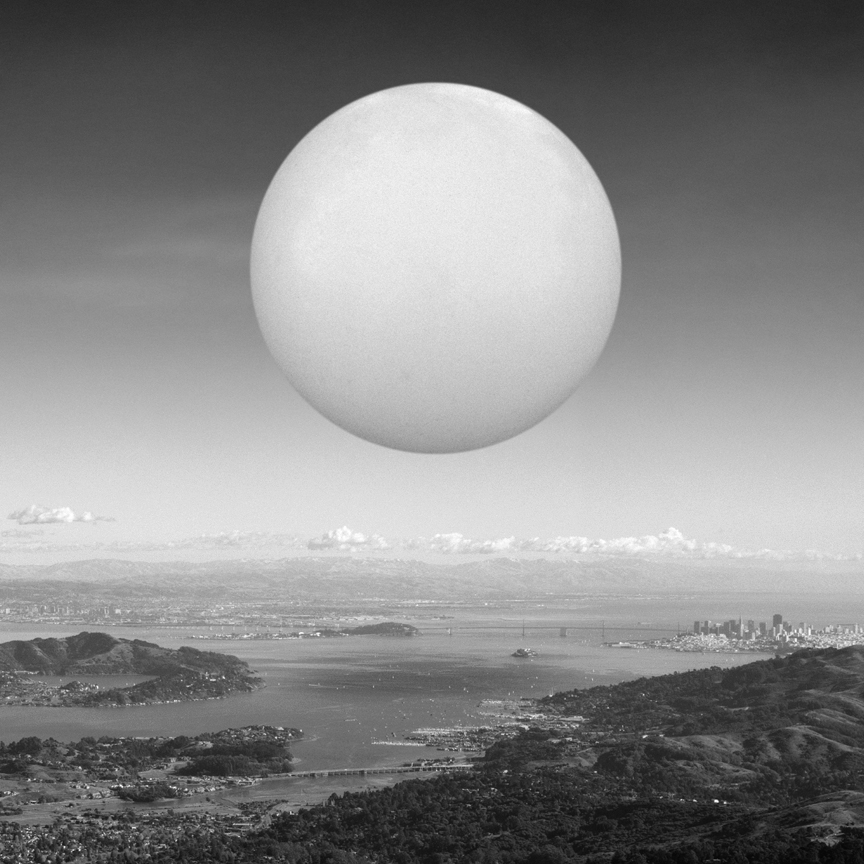
Today at Paul Habeeb's Latest Research, I find a link to the site of Jim Kazanjian -- whose otherworldly photography makes me think of nothing so much as of Escher, as if Escher had come back to life and gotten himself a digital camera and a graphics workstation... So, wow; that is nice to know about. But on a whim I follow Mr. Habeeb's via link, to Christopher Higgs' journal bright stupid confetti -- and find myself overwhelmed by the insane quantity of beautiful, interesting pictures -- paintings, photography, posters... surrealistic videos... lectures on poetry (in English) by Borges... I'm pretty much blown away by this site.
Update: More info about Jim Kazanjian at artistaday.com, where he was profiled last month.
Accompanying National Geographic's new article about the chimpanzees of Goualougo Triangle are some great videos, including a hilariously cute tape of one of the chimps discovering the hidden camera. Thanks for the link, Martha!
Another image from Heimat is making me wish I could find some stills and clips from this movie online; but no luck. The opening shot of Paul has been all in black-and-white; as he reaches his parents' farm he looks in the window of the barn where his father is working at the forge; its interior is shot in color but you don't notice this at first because it is dark -- the camera pans to the bar of iron that Herr Simon is hammering and its orange glow just fills the screen. And just as quickly pans/shifts back to outside and black-and-white. (The gruff, happy interaction between father and son in the next scene is pretty affecting stuff also.)
I happened on Matt Logue's E M P T Y L A project earlier this week -- impressive and beautiful! Impressive in a totally different way (and beautiful in a roughly similar way) are Masataka Nakano's Tokyo Nobody pictures -- rather than editing out the crowds and cars, Nakano waited for the moment when they were gone.
At Discover Magazine's Bad Astronomy blog, I find new pictures of Mars from NASA's Mars Reconnaissance Orbiter. (Thanks for the link, cleek!) The pictures of Martian sand dunes make a beautiful desktop background, so think I: (To a first order approximation, this is formations produced by the interaction between sand storms and frozen CO2.)
(Clicking on the "Full image (grayscale, non-map projected)" to the right under "JPEG Products" will give you a very large image file which you can crop at your leisure...)
Mary put out her hands to receive the earthenware bowl, which, through some extraordinary optical illusion, perhaps due to the light of the sky, was transformed into a vessel of the purest gold.
I started reading Saramago's Gospel According to Jesus Christ last night, the book which precipitated his self-imposed exile from Portugal. Taken aback by the grandeur of the heresy he lays out and by the subtle beauty with which he commits it. His voice describing Galilee and its denizens, and Mary and Joseph, has a familiar ring to it -- this book is very clearly written by the author of Balthazar and Blimunda.
By happy coincidence I was at the Brooklyn Museum today and got a chance to look at their collection of James Tissot's watercolors of The Life of Christ -- beautiful, meticulously researched and composed. Tissot is of course coming from a very different place than Saramago. But the commitment to a naturalistic rendering of Christ's life had me thinking of Saramago's work as I looked through this exhibition.
A few reading notes: The opening of the novel is a detailed description of a painting of the Passion, it had me wondering whether Saramago is describing a particular existing painting or a fictitious composite work. In the third chapter, when Joseph tells his tale to the council of elders, they send a delegation composed of Zacchæus, Dothan, and Abiathar ("names recorded here to forestall any suspicion of historical inaccuracy in the minds of those who have acquired their version of the story from other sources" -- ha!) to question Mary about her vision; I wonder where Saramago is getting this bit from. The three names are Biblical but I'm not finding any connection to the story of Jesus' conception.
A couple of videos for your viewing pleasure and enlightenment. From paledave at Orbis TerQuintus, an animated visualization of The Known Universe, from the surface of the earth to 5 billion light years away, and back. It is done by the American Museam of Natural History and the Rubin Museum of Art -- I have seen similar productions before, this one is really graceful and pretty.
I have seen a lot of links over the past few days to this story about the observation of tool use by octopodes in Indonesia -- today my dad sent me the link and I finally went and took a look. Thanks, dad! Pretty amazing to watch:
At Wired, Ethan Watters examines the push to delineate a symptom pool for the disorders of economic uncertainty.
We are debating as a culture which symptoms and feelings we will collectively recognize as legitimate expressions of distress over this particular problem. The idea is that, while our mental issues are totally real, they are often diffuse and hard to explain. So, as we strive to communicate our internal pain, weâ??re drawn toward describing symptoms that are culturally legitimized.









 I posted a brief note about Carlos Saura's breathtaking movie Fados at