|
|
Saturday, February 11th, 2012
(Continuing in this year's theme of re-readings:) A correspondent has gotten me back interested in Domingo Zárate Vega and The Art of Resurrection. This is the frontspiece to the book,  a pastoral letter written on the 25th of February, 1931, by the bishop of La Serena, José MarÃa Caro; in my own rough/not-fully-coherent translation (original at Casa del Libro): a pastoral letter written on the 25th of February, 1931, by the bishop of La Serena, José MarÃa Caro; in my own rough/not-fully-coherent translation (original at Casa del Libro):
Dear children of Our Lord:
What has been transpiring among you has filled with grief your bishop's heart.
A poor demented man presents himself among you -- one like those who fill our madhouses; and the faithful (I include in this adjective all those who go to church and who comply with their religion, fulfill their sacred duties) have received him as God's messenger, as the Messiah himself, no less, and have made themselves his apostles, his flock.
And meanwhile the faithful -- the judicious, the educated faithful -- have been tolerating this scandal, this blasphemy, tolerating mockery from these faithless maniacs; whose meanness of consciousness seizes any occasion to display its own lack of taste, lack of discretion, of appreciation for the things and people most worthy of universal respect and veneration... How can such a thing have happened -- how can such a hallucination be contagious? Our Lord has permitted it as a punishment for some one and as a humiliation for many.
We are all sensible enough to tell when someone else is in his right mind and when he has lost it. If among you, some poor campesino stood up and claimed in all seriousness, to be the King of England, if he surrounded himself with ministers (like such a king), and wore a special gown to show his office... Is there anyone among you, even a single one, who would not see the madness such a poor man was suffering from? Wouldn't it be the same if he claimed to be Our Holy Father?
And yet there are those among you who do not recognize his madness, because he claims to be not a person of this world, but nothing less than King of Kings and Lord of Lords himself. I repeat myself, our madhouses are full of just such things... Will any one among you let himself be led by the hallucinations of such a madman?
I pray that you, you who have suffered before this spectacle, will assist with your charity, with your prayers and with your counsels in ridding us of this contagious madness.
I ask, for the love of God and of one's brother, the love that we all must bear, I ask that you do everything, with your parish in mind, devote every force to keeping from this danger those who might fall into it, and to bringing back those who have been lost to this madness.
I hope, besides this, that when the authorities come to understand this evil, as I have demonstrated it to you, they will bring some remedy, will separate this danger from us all.
I wish you peace and felicity in Our Lord.
José MarÃa Caro
Caro RodrÃguez would later be named (by Pius â…«) Archbishop of Santiago and a Cardinal of the Catholic church, the first Chilean Cardinal. I could swear I saw a better translation of this letter somewhere, when I was first reading The Art of Resurrection. But am forgetting where now, or by whom.
posted evening of February 11th, 2012: 1 response
➳ More posts about The Art of Resurrection
|  |
Friday, February 10th, 2012
Glad to see you! Have a look around...
posted afternoon of February 10th, 2012: Respond
➳ More posts about The Secret History of Costaguana
|  |
Thursday, February second, 2012
Parecido a las otras utilizaciones de los labios y las manos, como sonreÃr, acariciar, enfurruñarse y pegar puñetazos, el ruido vocal hace enlaces entre la gente que desean o necesitan ser conectado -- para el apoyo reciproco o para establecer la jerarquÃa o para declarar la hostilidad, por ejemplo. Asà vemos que la canguro que hace monerÃas al niño realiza un acción lingüistica similar en general al escolar ambicioso que me saluda con un tono ascendente en la última sÃlaba del «Good morning, sir.» Y si esas acciónes sean comunicaciones, entonces necesitamos redefinir la comunicación: no como la transmisión entre A y B de estados mentales, menos aún como la transmisión de «informaciones», sino como la establecimiento, el refuerzo, la modificación de relaciones interpersonales del momento. Y serÃa mejor decir, no es comunicación, sino lenguaje. El lenguaje es una manera humana de relacionar a otros seres humanos.
...
El cuento de Babel se equivoca: el uso primordial del discurso humano fue más probable ser diferente, no el mismo.
-- D. Bellos
¿Es un pez en tu oreja?
posted evening of February second, 2012: Respond
➳ More posts about Is that a fish in your ear?
|  |
Wednesday, February first, 2012
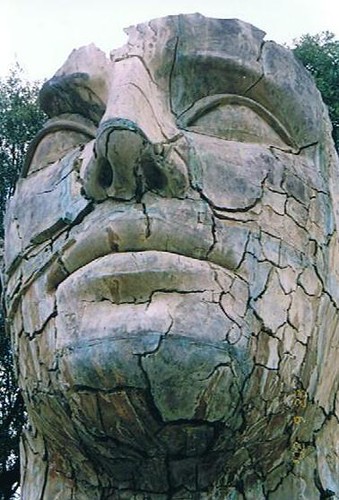 There aren't any words in the Bible anyways, let alone jokes, There aren't any words in the Bible anyways, let alone jokes,
I wouldn't worry so much about translating it,
about being swept into its blank void,
slipping frictionless and lucid across its empty page.
Those who have preceded you have left no spoor, no trace,
that you can make out anyways, and yet you know
full well their journey and retrace it.
Rilke asked who'd hear him,
among the choirs of heaven or
among the rankèd Angels or among their hierarchy, or something,
if he cried out -- and your throat is still,
your sigh is dead a-borning. Candle's flicker casts its shadows
among the ranked symbols and their blanknesses,
their blacknesses:
this yellowing forest of text.
posted evening of February first, 2012: 1 response
➳ More posts about Poetry
|  |
|
Ninguna palabra contiene el Biblio en todo caso, ninguna broma,
no tenga tanto miedo de traducirlo,
de dejarte arrastrado por su blanco vacÃo
deslizarte sin fricción y lúcido a través de la página.
Ellos quienes te precedÃan ninguno rastro han dejado,
ninguno que se puede observar, pero conoces
Ãntimamente este huela que retrazas.
There aren't any words in the Bible anyways, let alone jokes,
I wouldn't worry so much about translating it,
about being swept into its blank void,
slipping frictionless and lucid across its empty page.
Those who have preceded you have left no spoor, no trace,
that you can make out anyways, and yet you know
full well their journey and retrace it.
posted evening of February first, 2012: Respond
➳ More posts about Writing Projects
| |
Monday, January 30th, 2012
Los traductores traducen por traición (y por hoy casi como mandato) de un idioma extranjero a lo que se llama su lengua materna. En la jerga de los estudios de traducción, éso se llama traducción L1, a diferencia de la traducción L2, que se dice traducción hacia un idioma entendido, un otro idioma. Pero, ¿qué significa una lengua materna?
-- D. Bellos
¿Es un pez en tu oreja?
Me divertaba en los últimos dÃas, traduciendo de lo que se llama mi lengua materna a un idioma extranjero. ¿Por qué? Es divertido, delantero, y me hice pensar en el sentido de las palabras. Aún no he logrado cuantificar qué es, que me tan atractivo parece en relación con el bilingüismo... Todo que ha podido pensar degrada últimamente a tautologia.Examinando más tarde la declaración del San Jerónimo -- Ego enim non solum fateor, sed libera voce profiteor me in interpretatione Graecorum absque scripturis sanctis ubi et verborum ordo mysterium est non verbum e verbo sed sensum exprimere de sensu -- escribe Bellos que el San Jerónimo quizás trataba sobre un verdadero problema para los traductores: ¿cómo tratar los expresiones que no entiendes? En la lectura y la plática cotidiana nos acostumbramos a pasar por encima de tales expresiones, el sentido interpretando del contexto.
Donde el contexto no basta por interpretar, pasamos por encima. ¡Pasamos por alto todo el tiempo! Nadie entiende todas las palabras de Les Misérables, pero éso no mantiene nadie de disfrutar la novela de Hugo. Pero los traductores no se les permite pasar por alto.
posted evening of January 30th, 2012: Respond
➳ More posts about Readings
|  |
Saturday, January 28th, 2012

de "Cosas que se dicen sobre la traducción"
por David Bellos
¿Es un pez en tu oreja?: La traducción y el sentido de todo
CapÃtulo 4
(porque me está gustando traducir de un lenguaje que conozco solamente corto en inglés: intentamos el proceso al revés...)
La noción de que una traducción no se buen sustituye a la obra original debemos también someter a otra crÃtica. Se ese refrán esté válido, ¿qué reciban los lectores de una obra traducida? Por supuesto no la cosa auténtica. Pero más lejos, ni siquiera una sustituto: ni siquiera una Nescafé literaria. Afirmar la naturaleza irreemplazable del texto original los condena a ellos quienes no puedan leer el lenguaje en cuestión, a beber no Nescafé sino lavazas. Existiese ninguna opinión sobre el texto en que se vale creer, a menos que uno puede leer la obra original.Y aún es verdad, los ejemplos de Cervantes, Walpole, MacPherson, Gary, Guilleragues, Makine, Clifford y otras también se demuestren que nunca podemos estar seguros de que leemos una obra original.
Ismail Kadare recuenta otra historia sobre la dificultad de distinguir entre textos originales y traducidos en su novela memorial, Chronicle in Stone. Teniendo luego diez años, se fue encantado de un libro que lo regaló un tÃo de él. Su historia de fantasmas, de castillos, asesinos, traiciones le gustaba inmensamente, precisamente porque parecÃa explicar en parte las circunstancias que a él alrededor tenÃan lugar, en la ciudad fortificada de Gjirokastër durante esos años de guerras y disputas. Eso libro fue Macbeth, por William Shakespeare. El joven Ismail podÃa ver a la Dama Macbeth en su propia calle, se las manos retorciendo en el balcón, las cosas terribles lavándose que le sucedÃan en la casa. TenÃa ninguna idea de que este libro ha sido traducido de inglés. Fascinado infantilmente con un muchas veces releÃdo texto, copiaba sus palabras; preguntado hoy por los periodistas el tÃtulo de su primero libro escrito, responde siempre Macbeth, y hasta no más que la mitad de bromo. De cualquier modo que fue la traducción buena o mala, que a él tan le inspiró, seguramente no fue lavazas. Mucho mejor un elixir.
posted evening of January 28th, 2012: 1 response
➳ More posts about Translation
| |
|
http://htmlgiant.com/random/language-is-the-atmospheric-anomaly-our-fingers-and-tongues-make-happen/
por Christopher Higgs
El lenguaje es la excentricidad atmosférica que nuestros dedos y lenguas hacen ocurrir
Date cuenta del cantar de las lÃneas telefónicas suspendidas, la vibración de antenas de los carros dados ciertas rapideces medias espantosas. --un fenómeno similar, eolian, es ‘flutter’, por causa de vórtices abajo de los cables...
Consider the singing of suspended telephone lines or the vibration of a car antenna at certain mid-gruesome speeds. (A similar aeolian phenomenon is “flutter,†caused by vortices on the leeward side of the wire, distinguished from “gallop†by its high-frequency, low-amplitude motion.) To do so would be synonymous with considering the Kármán vortex street: a term in fluid dynamics for a repeating pattern of swirling vortices caused by the unsteady separation of a fluid’s flow over bluff bodies.
posted morning of January 28th, 2012: Respond
➳ More posts about Pretty Pictures
| |
Friday, January 27th, 2012
Es un hecho bien conocido que una traducción no buen sustituÃa el original.Es también todamente falso.
La traducción (en el primero sentido aquà de Bellos) me mueva pero en esa lectura me preguntaba a qué manera me debÃa movar. Deseaba desde la adolescencia me poder pensar traductor y desde casi tan largo me preguntaba ¿por qué? y ¿qué aún significa éso?También no tengo respuestas...
posted evening of January 27th, 2012: Respond
|  |
Wednesday, January 25th, 2012
El último cuento de la colección nueva de Zupcic, Médicos taxistas, se dramáticamente diferencia del resto -- todos los son muy elegantes y lúcidos pero no (a excepción tal vez del hermoso "Tescucho, Italia") me inquietante cogen como los padre-ausente-y-criminal cuentos de sus colecciones jóvenes. Éso sà y hace una conexión bonita a los cuentos anteriores. (Los nuevos son indudablemente más fácil traducir, no estoy seguro de cómo esto interpretar.)
Cada uno de los cuentos en Médicos taxistas es a su manera excéntrico, es difÃcil clasificarlos juntos. El cuento titular me encuenta y en segunda lectura me deja pensando que es otra cosa detrás de la historia pero no puedo ver qué es. "El Barbero de DalÃ" me ha riendo y rascándome la cabeza. "Doble Chávez" me da un sentido no del todo bienvenido de la identificación. Una lectura muy divertida.
"Amor que a otro puerto pertenece," el último cuento y el más largo, reexamina a otra manera la tema de Zlatica Didic y su hijo Zlatko Didic que Zupcic (Slavko el hijo de Slavko Zupcic) visitó por primera vez en su "Cartas hacia una novela". Zlatko comienca aquÃ, "Comencé a escribir este relato hace casi veinte años..." y de repente tengo una imagen más claro y más estimulante del (sin duda pequeño) cuerpo de su obra. Todo se junta.
 The last story in Zupcic's new collection Médicos taxistas differs dramatically from the rest -- all of them are elegant and clear but none of them (except perhaps the beautiful "Tescucho, Italy") seizes me in the disquieting way that the absent/criminal-father stories in his juvenile collections do. This one does, and it creates a nice link to his earlier stories. (The new ones are indubitably easier to translate, I'm not quite sure what to make of this.)
Each of the stories in Médicos taxistas is oddball in its own way, I would have a hard time grouping them together. The title story enchants me and on second reading makes me feel I'm missing some element behind the story -- but certain that the unknown element is present behind the story. "The Barber of DalÃ" ("DalÃ's Barber" is probably a closer translation but I like the rhythm of this title) leaves me laughing and scratching my head. "Chávez Double" gives me a not completely welcome rush of identification. All in all a lot of fun to read.
"A Love Which Belongs to the Other Door," the last story and the longest, takes another look, through a different glass, at the subject of Zlatica Didic and his son Zlatko Didic, whom Zupcic (Slavko son of Slavko) first visited in his story "Letters Towards a Novel". Zlatko starts off by saying, "I began writing this story almost twenty years ago..." and suddenly I get a much clearer, more moving vision of the (to be sure small) body of his work -- it all comes together.
↻...done
posted evening of January 25th, 2012: Respond
➳ More posts about Slavko Zupcic
| Previous posts about Projects
Archives  | |
|
Drop me a line! or, sign my Guestbook.
•
Check out Ellen's writing at Patch.com.
| |




 wraps up